About
The preservation and promotion of India's ancient cultural heritage, tangible, intangible and knowledge heritage, alongside nurturing Gandhian heritage and commemorating centenaries of eminent national figures.
The Ministry of Culture is the Government of India's principal institution for art, culture and heritage. Formed as a distinct ministry in 1999, it funds and oversees the national akademis for music-drama, literature and fine art (Sangeet Natak, Sahitya and Lalit Kala), the National Museum and National Gallery of Modern Art, the Archaeological Survey of India, the National Culture Fund, and a wide range of grants, scholarships and festivals. [Atlas Assessment] It is the single largest public funder of culture in India, and the ultimate source of support behind a large share of the country's festivals, institutions and heritage conservation.
The Ministry of Culture was originally established as the Department of Culture in 1971, administered for its first 14 years under the Ministry of Education and Social Welfare. In 1985 it was moved under the newly created Ministry of Human Resource Development, and in 1999 it was separated and briefly merged into a joint Ministry of Tourism and Culture. Plans to fully detach culture as an independent ministry were first announced in 1998 under Prime Minister Atal Bihari Vajpayee, but full independence materialised only in 2006 under Prime Minister Manmohan Singh's government. The Ministry now has two attached offices, seven subordinate offices and 34 autonomous organisations, fully funded by the central government, including the Archaeological Survey of India (founded 1861), the National Archives of India, the four national academies (Sahitya Akademi, Sangeet Natak Akademi, Lalit Kala Akademi and the National School of Drama), and seven Zonal Cultural Centres coordinating regional folk arts across the country. In 1996 it established the National Culture Fund to mobilise extra-budgetary funding from government, private and individual sources for heritage preservation. Gajendra Singh Shekhawat is the current Minister of Culture. The Ministry's FY2023-24 budget allocation was reported at approximately Rs 2,500-3,400 crore across different disclosures, with archaeology, archives and museums historically receiving the largest single share.
Founding & Leadership
Government budget (Union Budget allocation)
Headed by the Union Minister of Culture (Cabinet rank, currently Gajendra Singh Shekhawat) with a Minister of State (Rao Inderjit Singh), and administered by a Secretary, Ministry of Culture (currently Vivek Aggarwal, IAS), across 2 attached offices, 7 subordinate offices and 34 autonomous organisations.
Initiatives & Portfolio
Mobilises extra-budgetary funds from government, private and individual donors for heritage preservation.
Quarterly stipend for elderly artists and scholars in financial hardship.
7 centres coordinating regional folk arts, crafts and festivals nationwide.
Reimburses GST on food ingredients used by charitable religious institutions for free meals.
Cultural Funding
Cultural verticals
Impact & Metrics
Partnerships & Network
Funders & patrons
Credentials & Compliance
As a central government ministry, the Ministry of Culture's finances are disclosed through the Union Budget and are subject to CAG audit, rather than through 80G/12A/CSR-1/FCRA charitable frameworks, which do not apply. FY2023-24 budget allocation was reported at approximately Rs 2,500-3,400 crore across different disclosures.
Not applicable. The Ministry is itself the government funder behind much of India's cultural CSR-adjacent activity, not a CSR recipient.
In the Press
Gallery

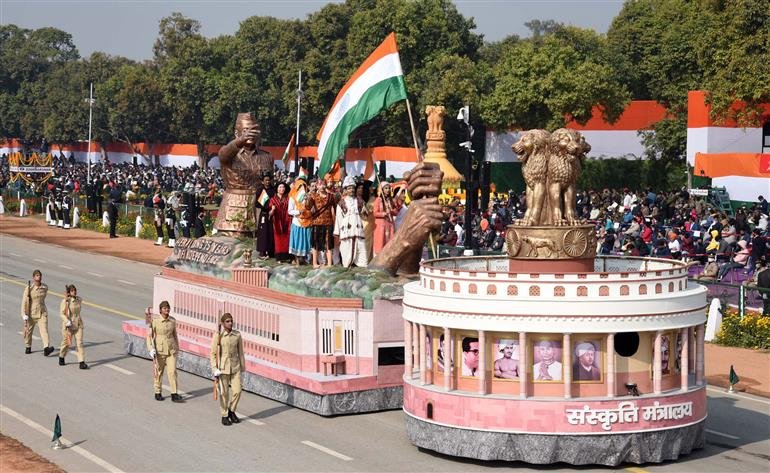



The Ministry of Culture's significance is foundational: it is the apex central government body overseeing nearly every major cultural institution profiled in this Atlas, either directly (ASI, the national academies, NSD) or through its regulatory and funding relationships with state governments and independent organisations. Its long, winding administrative history, moving between education, human resources and tourism ministries before achieving independent status only in 2006, reflects how comparatively late India treated culture as a standalone government priority relative to other policy areas. Its 34 autonomous organisations and seven Zonal Cultural Centres give it an unusually wide institutional footprint, spanning archaeology, performing arts, literature, museums, archives, and Buddhist and Tibetan studies, functioning as a genuine policy umbrella rather than a narrowly focused grant-making body.
The Ministry is best read as the funding and policy spine behind almost the entire Culture Atlas: most national institutions profiled here (the akademis, ASI, national museums) are its own attached or autonomous bodies. Its long administrative history bouncing between education, human resources and tourism portfolios before independent status in 2006, and its comparatively modest budget relative to its enormous mandate, are the honest structural caveats to an otherwise foundational role.