The Story
OrganizerThe Rashtriya Sanskriti Mahotsav was conceived to solve a particular problem: how to take India's cultural diversity out of auditoria and galleries and carry it directly to people across the country. Launched in 2015 as the flagship festival of the Union Ministry of Culture, and organised through the ministry's seven Zonal Cultural Centres, the National Culture Festival is by design a roving event, moving from state to state and city to city rather than settling in a single home, so that the culture of one region can be experienced in another.
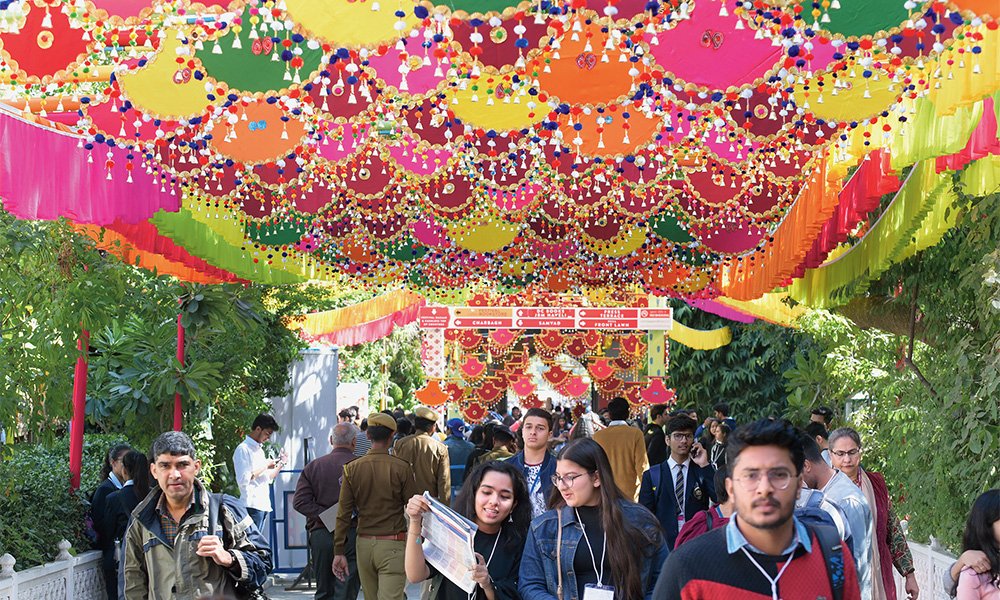
That mobility is the point. Over its editions the festival has been staged in Madhya Pradesh, in Andhra Pradesh and Telangana, in Mumbai and Bikaner, in Hyderabad and beyond, each time gathering the arts of the whole country onto a local ground. A typical edition brings together hundreds of folk and tribal artists from across India alongside local performers, classical maestros and star artists, and often makes a point of including transgender and differently abled artists, so that the evening stages carry classical, folk and contemporary forms side by side. Around the performances the festival builds a fuller cultural marketplace: an Angan of craft stalls where artisans from every zone sell their work, painting and handicraft exhibitions, and a food court offering the cuisines of India's regions, including millet-based foods in recent editions, all with free entry for the public.
The animating idea is captured in the slogan the festival carries, Ek Bharat Shreshtha Bharat, one India, great India: by showcasing the three Cs of heritage, culture, craft and cuisine, of one state within another, the Mahotsav frames cultural exchange as an instrument of national unity and integrity. At the same time, and no less importantly, it provides folk and tribal artists and artisans, whose livelihoods depend on visibility and sales, an effective platform across the country. In its scale, its reach and its roving form, RSM has become the government's principal vehicle for putting India's living cultural diversity in front of a mass public.
The Rashtriya Sanskriti Mahotsav is significant as the Indian state's principal instrument for democratising access to the country's cultural diversity, and as a large-scale platform for folk and tribal arts, crafts and cuisine. Its roving form deliberately carries the culture of one region into another, making cultural exchange a lived experience for mass audiences and advancing the Ek Bharat Shreshtha Bharat idea of unity through diversity. By bringing hundreds of folk, tribal and classical artists and artisans onto public stages and marketplaces with free entry, it supports both the visibility of endangered traditions and the livelihoods of the communities that practise them. As a flagship of the Ministry of Culture operating through the Zonal Cultural Centres, it also expresses a national cultural policy in festival form.
As folk and tribal traditions seek audiences and income, a large, free, roving national festival that carries them across the country and supports artisan livelihoods matters both culturally and economically. RSM gives mass publics direct access to India's regional arts, crafts and cuisines, and gives practitioners a recurring national platform. As the Ministry of Culture's flagship, it is also a barometer of state cultural priorities. For the Atlas, RSM is a significant node in mapping India's folk, tribal and multi-arts landscape and the institutions that circulate it.