The Story
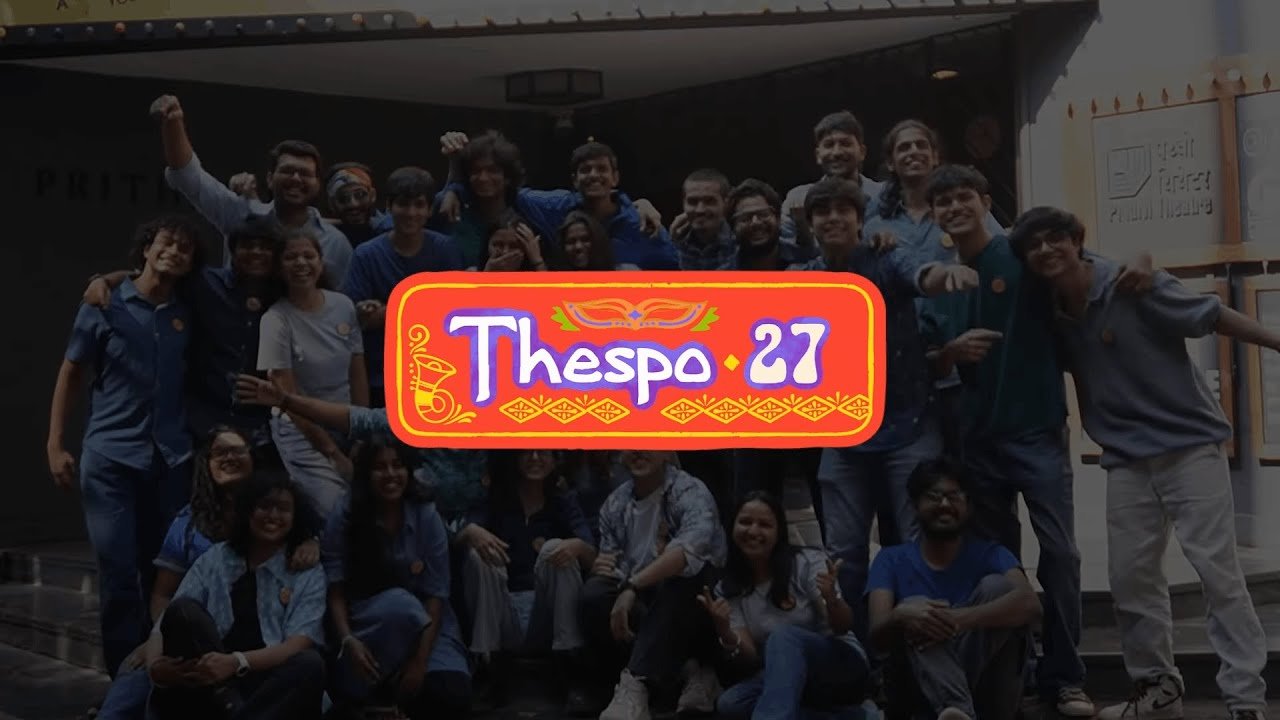
OrganizerThespo is a youth theatre movement founded in 1999 by Theatre Group Bombay, one of India's oldest English-language theatre companies (established 1944, whose members include Alyque Padamsee, Sabira Merchant and Gerson da Cunha), and is today produced by QTP Entertainment, the Mumbai theatre and arts management company that also manages Tata Literature Live! and presents the God of Carnage and Every Brilliant Thing among its own productions. Thespo is registered as a not-for-profit society under the Bombay Public Trusts Act, 1950, and the Societies' Registration Act, 1860. Its core mission is to provide a platform for anyone under 25 interested in any aspect of theatre, acting, directing, design, stage management, regardless of language, art form or location. Each year, theatre groups from across India submit plays (95 submissions from cities including Ahmedabad, Delhi, Guwahati, Jaipur, Kolkata and Kathmandu in a recent cycle); a panel of theatre professionals screens submissions between September and October, and selected plays are staged live at Prithvi Theatre in December during the festival week. In 2020, amid the Covid-19 pandemic, Thespo ran what it described as India's first international digital youth theatre festival.
Thespo's significance lies in its specific age-gated mandate, a platform exclusively for under-25 theatre-makers, which has made it a genuine entry point into Indian professional theatre and, in several cases, film and television, for a generation of now-prominent performers, including alumni such as Richa Chadha, Ali Fazal, Jim Sarbh and Kalki Koechlin. Its national, cross-lingual submission process, drawing plays from dozens of Indian cities and multiple languages rather than a Mumbai-only or English-only pool, gives it a genuinely pan-Indian talent pipeline function distinct from a purely local youth theatre programme. Its institutional home at Prithvi Theatre situates it within one of India's most established theatre venues, while its own registered not-for-profit structure and professional QTP production give it operational continuity independent of any single founder's ongoing involvement.
Thespo is confirmed active, having run its annual festival consistently including a digital pivot during the pandemic, with the movement continuing its established submission and screening cycle in the years since. For institutional and CSR audiences, Thespo is a clear example of dedicated youth talent-development infrastructure within India's theatre sector, distinct from adult-facing theatre festivals in this Atlas, and its documented career pipeline into professional Indian theatre, film and television gives it a measurable talent development outcome beyond the festival week itself.
Launched many careers and embedded a culture of young, original theatre.