The Story
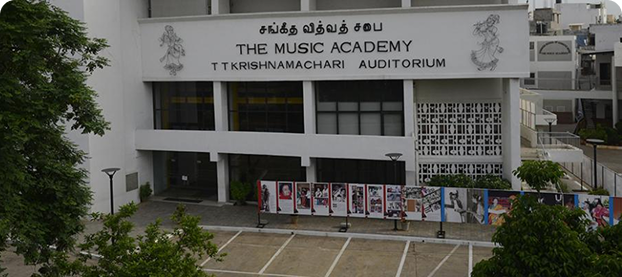
OrganizerThe Chennai Margazhi season grew out of a moment of cultural nationalism. In December 1927, the Indian National Congress held its annual session in Madras, and alongside it an All India Music Conference convened, driven in part by E. Krishna Iyer, a figure also central to the revival of Bharatanatyam. The conference resolved to found an institution for the cause of music, and in 1928 the Music Academy, Madras was established. Its annual December music festival quickly became a fixture. The decision to centre the festival on the Tamil month of Margazhi (mid-December to mid-January) proved transformative. The weather was cooler, more comfortable for both performers and audiences than the Madras heat, and the period coincided with Christmas and New Year holidays, drawing larger and more diverse crowds. The month was already steeped in devotion in Tamil culture, with dawn temple hymns and bhajans; the festival gave that devotional energy a concert form. What began as a single week-long festival multiplied. Through the 1930s and the mid-20th century, more and more sabhas (cultural societies such as the Parthasarathy Swami Sabha (founded as early as 1900), Sri Krishna Gana Sabha, Narada Gana Sabha and the Mylapore Fine Arts Club) began mounting their own December seasons. The result is the modern Margazhi: not one festival but a vast, simultaneous web of them. Across six to nine weeks, hundreds of sabhas stage thousands of concerts (kutcheris), lecture-demonstrations and dance recitals, from dawn lec-dems at 8am to performances running past 9pm. The Music Academy's Dance Festival, launched in 2007, formalised Bharatanatyam's central place in the season. Today the season draws performers and rasikas (connoisseurs) from across India and the global Carnatic diaspora, who plan annual pilgrimages home around it. Chennai's designation in UNESCO's Creative Cities Network for music in 2017 recognised this extraordinary, living tradition. Nearly a century on, the season remains the beating heart of South Indian classical arts.
The Margazhi season's cultural significance is its role as the central institution of the Carnatic musical and Bharatanatyam traditions, the principal mechanism by which these living art forms are performed, transmitted, judged and renewed each year. It is, in effect, the annual general assembly of South Indian classical arts. Its scale is unmatched: by hosting thousands of performances across hundreds of venues in a single season, it concentrates the entire profession in one place and time, allowing repertoire, technique and innovation to circulate intensively. It is where reputations are made, where the Music Academy's Sangita Kalanidhi anoints the tradition's leading exponents, and where young artists earn their place alongside maestros. The season also sustains a global community. For the worldwide Carnatic diaspora, the December season is a homecoming and a touchstone of identity. And in its fusion of the devotional and the artistic (rooted in the sacred associations of Margazhi yet staged as secular concert culture) it embodies a distinctively South Indian synthesis of faith, art and connoisseurship.
The Margazhi season matters as one of the world's most successful models of a self-sustaining living classical tradition. While many classical art forms globally struggle with ageing audiences and shrinking institutional support, Carnatic music thrives through a decentralised, community-funded ecosystem of sabhas that renews itself annually and increasingly engages younger and digital audiences. It demonstrates how a centuries-old art form can remain economically and culturally vital without depending on a single patron or state body.
The season institutionalised and sustained Carnatic music and Bharatanatyam as living performance traditions; created the world's largest platform for classical Indian arts; established the Sangita Kalanidhi and other honours that structure the field; nurtured generations of artists from debut to mastery; and built a global community and diaspora identity around South Indian classical culture.