The Story
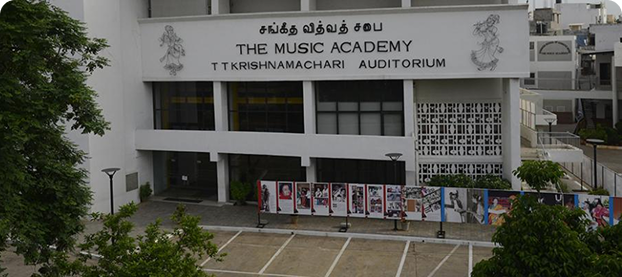
OrganizerThe Chennai Photo Biennale was founded in 2016 by the CPB Foundation and Goethe-Institut Chennai, conceived specifically to address a lack of dedicated exhibition space and critical attention for historical and contemporary photography in South India. Its inaugural edition ran from 26 February to 13 March 2016 across nine venues, including a light house station on Chennai's mass transit system, a public park, and gallery spaces such as Alliance Française de Madras, drawing over 100,000 visitors and featuring photographers including Raghu Rai, Munem Wasif and Angélica Dass. The second edition (February-March 2019), curated by performance artist Pushpamala N under the theme 'Fauna of Mirrors', was substantially crowd-funded. The third edition, delayed a year by the Covid-19 pandemic, ran under the theme 'Maps of Disquiet', curated jointly by Bhooma Padmanabhan, Arko Datto, Boaz Levin and Kerstin Meincke, and addressed themes of state surveillance, ecological collapse and majoritarian politics, framed around Chennai's history as the site of the 1802 Great Trigonometrical Survey. A fourth edition ran across 2024-25, and the CPB Foundation now runs an annual International Photography Open Call as a standalone programme alongside the biennale itself.
Chennai Photo Biennale's significance lies in its position as South India's first large-scale public event dedicated specifically to photography and lens-based art, filling a gap its founders identified in a region with comparatively little dedicated institutional space for the medium. Its consistent use of unconventional public venues, fishing harbours, train stations, abandoned factories, rather than conventional galleries, is a deliberate curatorial strategy aimed at demystifying photography for a general public rather than an art-world audience. Structurally, it is run by a dedicated non-profit foundation in partnership with a foreign cultural institute (Goethe-Institut), a funding and governance model distinct from either government-run or purely commercial art festivals, and it has increasingly folded in youth education, mentorship and fellowship programming (such as the Kanavu Fellowship for women photographers) as a year-round complement to the biennale itself.
The Biennale remains active, with a fourth edition confirmed across 2024-25 and its International Photography Open Call, launched as part of that edition, now established as an annual feature drawing entries from dozens of countries (1,930 entries from 43 countries in its most recent cycle). Beyond the biennale itself, the CPB Foundation runs year-round education and mentorship programmes, positioning it as an ongoing institution rather than a purely periodic event. For institutional and CSR audiences, it is a useful example of a foundation-and-cultural-institute funding model (paired with crowd-funding in at least one edition) sustaining a major public arts event without government or single-corporate backing, distinct from most other biennales and art festivals in this Atlas.
Established a recurring, ambitious photography biennale where none existed.