About
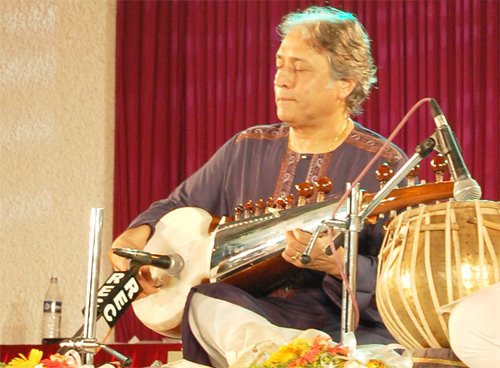
Ustad Amjad Ali Khan, born 9 October 1945 in Gwalior, is one of India's most celebrated classical musicians and a sixth-generation sarod player of the Senia Bangash lineage, a family credited with developing the instrument. Trained by his father, Ustad Hafiz Ali Khan, he gave his first recital at the age of six and has performed internationally since the 1960s.
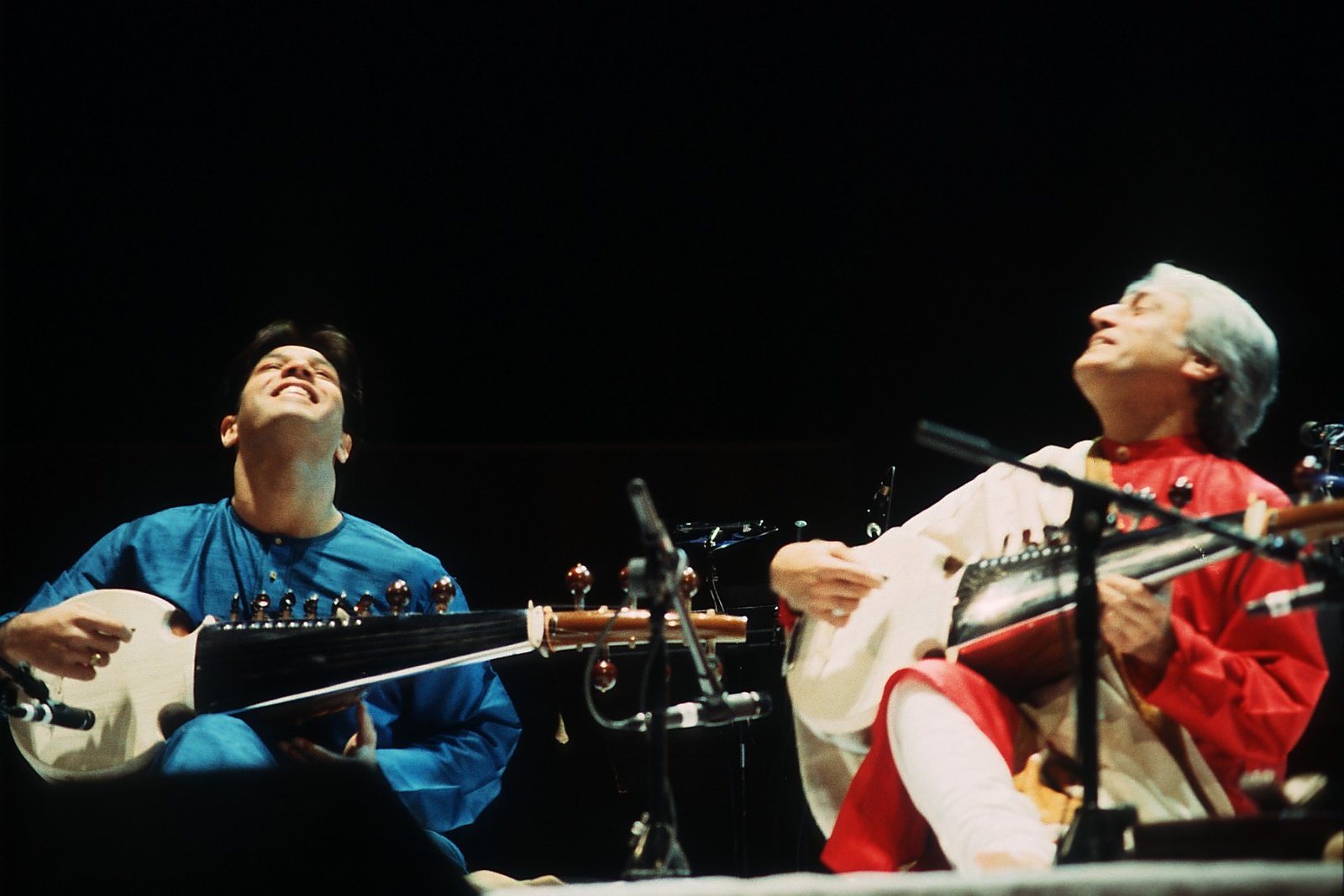
Khan is known for his clear, fast ekhara taans, vocal-based compositions and an elegant, simplified approach that reshaped sarod technique and even the instrument's design. He has extended the sarod into the orchestral world with his concerto Samaagam, collaborated with the Grammy-winning guitarist Sharon Isbin on Strings for Peace, and performed Raga for Peace at the 2014 Nobel Peace Prize Concert. He continues to tour worldwide, often with his sons and fellow sarod players Amaan Ali Bangash and Ayaan Ali Bangash.
The artistry
Khan plays with unmatched control and clarity, celebrated for ekhara taans that span three octaves and for compositions rooted in vocal music. His style reflects the older dhrupad tradition while remaining lyrical and elegant, and he has modified the sarod itself to refine its tone.
Repertoire
Performance
Publications & productions
Career & milestones
Festivals & appearances
Lineage & training
Recognition
Affiliations
Gallery

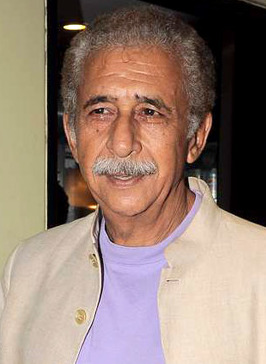

Ustad Amjad Ali Khan connects directly to the Hindustani Instrumental artform profile and to the Hindustani Classical Music umbrella profile. His base in New Delhi connects to that destination profile. His international touring and collaborations with Western classical musicians represent the global reach of the Hindustani instrumental tradition documented in the artform profiles.
Ustad Amjad Ali Khan's career has been central to establishing the sarod as an instrument of international significance. His recordings, international tours and teaching have brought the Senia Bangash tradition and the Hindustani classical vocabulary to global audiences while maintaining the highest standards of classical practice.