About
Gulzar, born Sampooran Singh Kalra on 18 August 1934 in Dina (in present-day Pakistan), is among the most revered Urdu poets of the modern era, and also a celebrated lyricist, author, screenwriter and film director. He began as a lyricist with the 1963 film Bandini and went on to define a poetic strand of Hindi cinema, while building a major body of literary work in Urdu and Hindustani.
A restless innovator, Gulzar created the three-line poetic form he called the Triveni and has written extensively across poetry, short fiction, children's writing and translation. He directed acclaimed films including Aandhi, Mausam and Maachis and the television series Mirza Ghalib. His honours include the Sahitya Akademi Award, the Padma Bhushan, the Dadasaheb Phalke Award, an Academy Award and Grammy for Jai Ho, and India's highest literary honour, the Jnanpith Award, received in 2025.
The artistry
Gulzar writes in a spare, image-rich Hindustani that fuses colloquial Hindi and Urdu with Punjabi and other tongues, giving even the simplest words unexpected depth. His triveni, a three-line form he pioneered, and his blank-verse nazms turn everyday observation into quiet revelation. As a lyricist he bent film song toward poetry, coining images of startling originality, and as a director and screenwriter he brought the same literary sensibility to cinema, prizing suggestion, silence and the unsaid over the obvious.


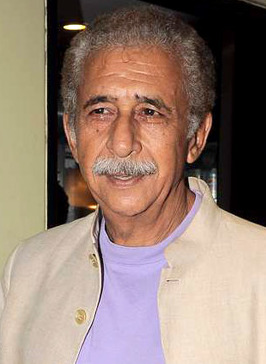

Gulzar is a living literary institution and a marquee draw at literary festivals and Urdu-culture events, where in-conversation sessions and readings command overflow audiences. His presence anchors any programme centred on Urdu poetry or Indian cinema. [Atlas Assessment]
Gulzar is a towering figure who joined the depth of classical Urdu poetry to the vast reach of popular Hindi cinema, shaping the language of both for generations. A Sahitya Akademi awardee, Padma Bhushan, Dadasaheb Phalke laureate and Oscar and Grammy winner, he has kept literary Urdu alive for mass audiences, mentored younger poets, and made poetry feel intimate and contemporary. His body of work across verse, song, screen and children's writing stands among the defining cultural achievements of modern India.