Origin & evolution
Therukoothu's origins are traced to the ancient Tamil theatre tradition documented in the Natya Shastra and in Tamil Sangam literature. The form as it currently exists is most closely associated with the 18th-century composer Pukalenthi, whose text Mahabharata Koothu established the standard dramatic texts that are still performed today. The tradition is most deeply rooted in the Draupadi Amman festival cult of northern Tamil Nadu, where Therukoothu performances are offered as part of the extended festival cycle honouring the Pandava princess.
The traditional performance circuit is the village festival (tirunala), where Therukoothu troupes are invited to perform as part of the communal devotional offering. A traditional performance begins at dusk and continues until dawn, presenting a single episode from the Mahabharata with the full elaboration of song, dance, dialogue and audience interaction that the form requires.
Why Therukoothu
Therukoothu's theatrical space is typically a village street or an open ground in front of a temple. The performance area is marked by a kaattaiyam (a decorated structure representing a chariot) and lit by petromax lamps or, increasingly, electric lighting. The audience surrounds the performance area on three sides.
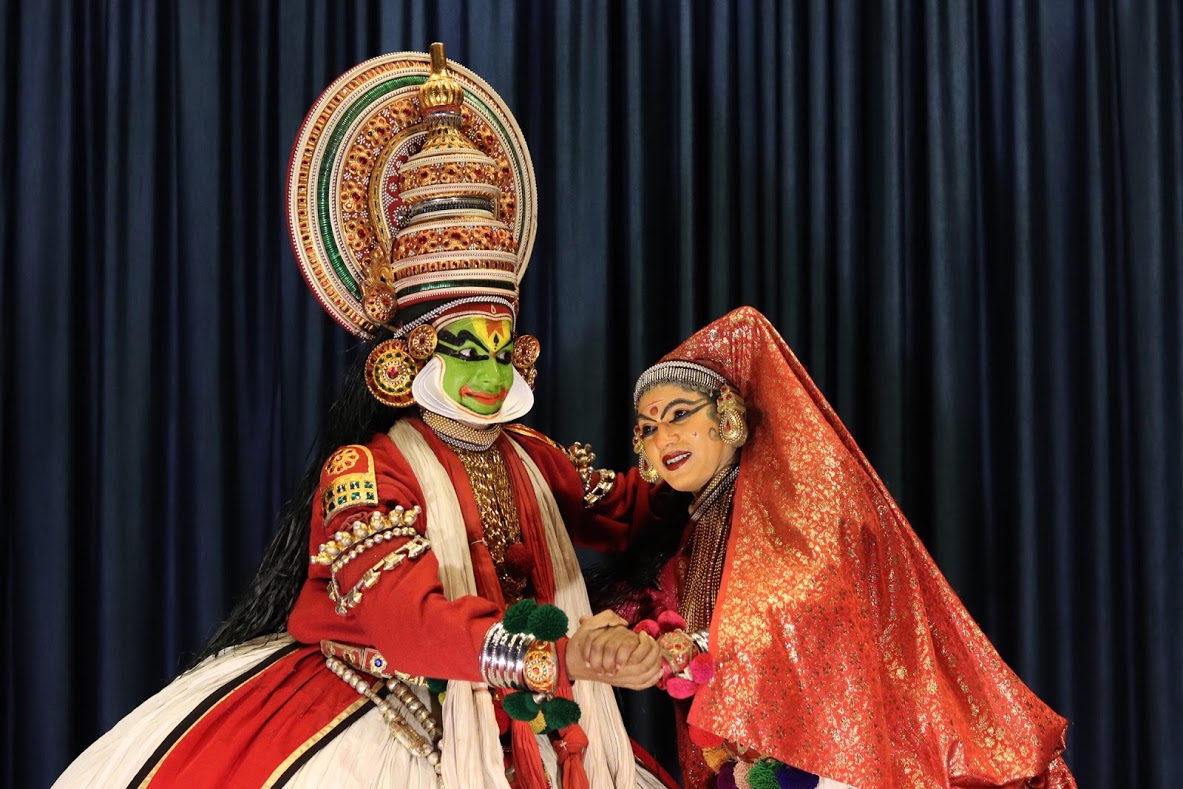
The costume and makeup are elaborate: the central characters are identified by their specific colour schemes and ornamentation. The kattiyakaran (clown figure) mediates between the mythological world of the performance and the contemporary reality of the audience, making topical jokes and direct addresses that keep the performance rooted in the present.
The Therukoothu text is a combination of verse (composed songs) and prose (improvised dialogue). The actors sing the composed verses and then elaborate in improvised prose, allowing contemporary references and audience interaction to enter the mythological narrative. This improvisational freedom within a composed framework is characteristic of South Indian folk theatre.
The tradition & its craft
Therukoothu is transmitted primarily within communities of hereditary performers who have maintained the tradition across generations. The Kattaikkuttu company in Tamil Nadu, founded by P. Rajagopal, has been particularly significant in systematising training, documenting the tradition and creating links with international theatre communities. P. Rajagopal's Kattaikkuttu Gurukulam, a residential training centre, has trained performers from both traditional and non-traditional backgrounds.
Types & forms
Masters across the generations
Signature works
In cinema & popular culture
Therukoothu's visual aesthetic and narrative structure have influenced several Tamil films. Several significant Tamil directors have incorporated Therukoothu elements into their films as markers of Tamil folk cultural identity. Documentary films on the tradition have been produced by both Indian and international filmmakers.
Contemporary presence
Therukoothu has benefited from international attention and from the work of cultural entrepreneurs like P. Rajagopal of the Kattaikkuttu Gurukulam. The form has been presented at European theatre festivals and has attracted academic interest from international performance studies scholars. Within Tamil Nadu, the village festival circuit continues to sustain the tradition, though pressures from competing entertainments have reduced the number of all-night performances.
Across the regions
Therukoothu is concentrated in northern Tamil Nadu, particularly in the areas around Chennai, Kanchipuram, Vellore and Tiruvannamalai where the Draupadi Amman festival tradition is most active. The form has been presented at national and international theatre festivals, including festivals in Europe where the Kattaikkuttu company has toured regularly.
Where it lives
Recognition & status
Further reading
The Atlas perspective
Therukoothu connects on the Culture Atlas graph to the Chennai destination profile and to the Carnatic Music artform (shared Tamil cultural ecosystem). The form's score of 8.0 reflects its deep historical roots, living practice and international recognition.