About
Purbayan Chatterjee, born 12 September 1976 in Kolkata, is one of India's leading sitar maestros, a torchbearer of the Senia Maihar gharana founded by Baba Allauddin Khan. Trained from the age of five by his father Pandit Parthapratim Chatterjee and later by Ustad Ali Akbar Khan, with vocal training under Ajay Chakraborty and tabla under Anindo Chatterjee, he won the Rashtrapati Award as the country's best instrumentalist at fifteen.
Deeply inspired by the lyrical style of Pandit Nikhil Banerjee, Chatterjee is celebrated for both pure classical recitals and pioneering fusion. He conceived Shastriya Syndicate, described as the first Indian classical band, and leads the band Classicool, collaborating with musicians from Zakir Hussain and Bela Fleck to Snarky Puppy and Herbie Hancock. Through the Purbayan Arts and Artists Music Foundation he supports the next generation of classical musicians.
The artistry
Chatterjee plays with the melodic patience and lyrical fingerprint of the Nikhil Banerjee style, unfolding a raga with unhurried grace before building to dazzling technical passages. A torchbearer of the Senia Maihar gharana, he combines classical depth with a restless creativity, moving between traditional recitals and adventurous collaborations in jazz, world and fusion music. His sitar playing is marked by clarity of tone, rhythmic sophistication and an improviser's spontaneity, rooted in tradition yet reaching outward.
Repertoire
Performance
Publications & productions
Career & milestones
Festivals & appearances
Lineage & training
Recognition
Affiliations
Gallery
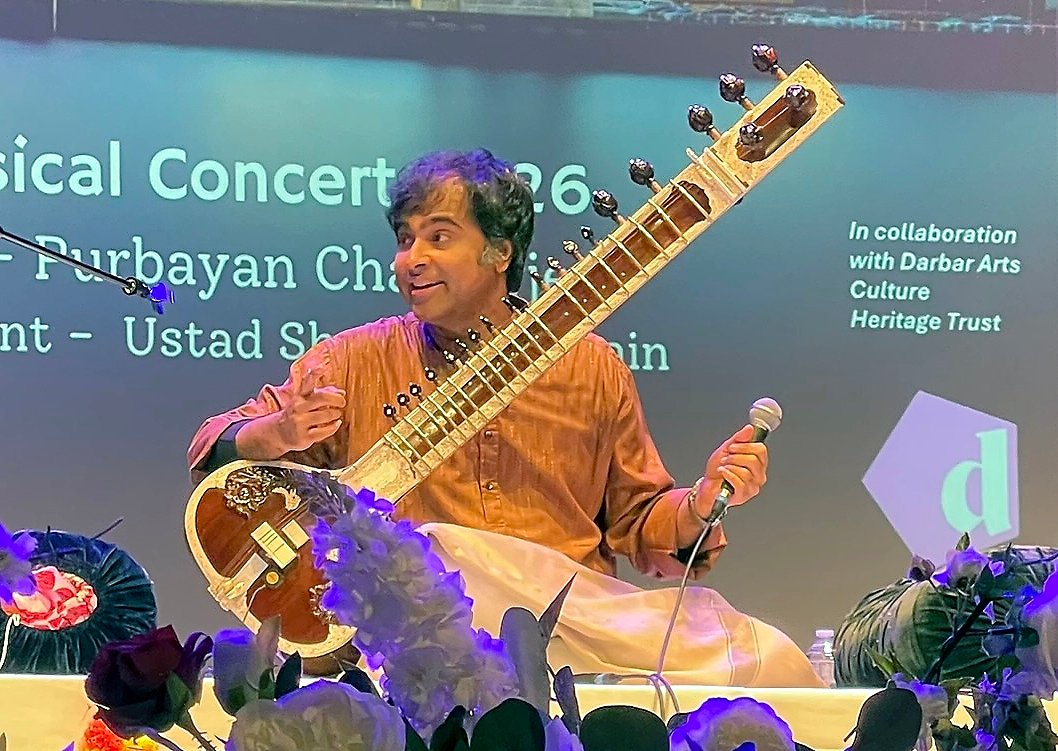
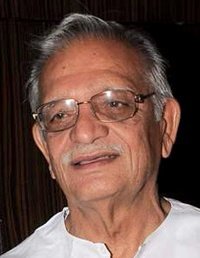

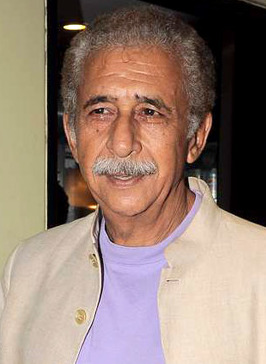

Chatterjee offers a host a virtuosic classical sitar recital or a genre-crossing band project with international pedigree. His fusion ensembles suit ambitious festival and concert-hall programming. [Atlas Assessment]
Purbayan Chatterjee is a leading sitar voice of his generation who bridges the Senia Maihar classical tradition and contemporary global music. A widely travelled soloist and collaborator, he has drawn new and younger audiences to the sitar through cross-genre projects while sustaining rigorous classical performance. His blend of tradition and experimentation has helped keep Hindustani instrumental music vital and relevant in a changing musical landscape.