Origin & evolution
Theyyam, from the Malayalam deivam (god), is an ancient ritual dance-theatre of the sacred groves (kavu) and shrines of north Malabar, believed to be a Dravidian tribal tradition assimilated into broader Hindu practice over many centuries. It venerates ancestral spirits, local deities, warrior-heroes and goddesses. Over 400 distinct Theyyams have evolved, many confined to particular localities, with the right to perform restricted to specific communities, chiefly the Malayan and Vannan castes, categorized as Scheduled Castes, who are its chief performers. The season runs from after the harvest in October to April-May.
Why Theyyam
Theyyam collapses the distance between worshipper and worshipped: the belief is that during the performance the deity enters the body of the performer, so the costumed figure is not representing a god but is, for that time, the god, venerated by people of all castes. In that ritual space no authority stands above the Theyyam, a striking inversion in which a Scheduled-Caste performer becomes the object of universal veneration.
The tradition & its craft
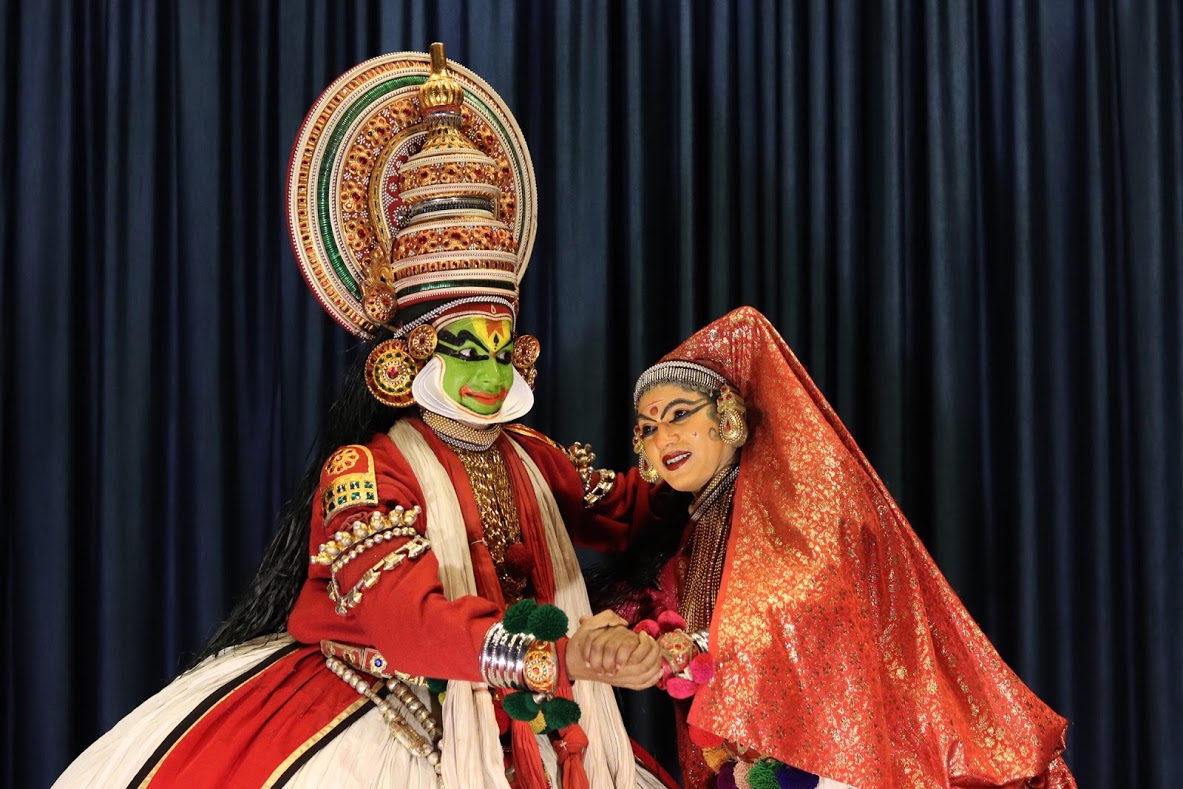
The performer, in a towering wooden-and-palm mudi, vivid face paint and elaborate costume, dances to the driving chenda drum, kuzhal wind and ilathalam cymbals, building to a frenzied tempo; some Theyyams involve burning flares and fire. Major forms include Muchilottu Bhagavathy (Kali), Muthappan, Kathivannur Veeran and Vishnumoorthy, and the pantheon extends to tree and mountain gods, hunting gods and even Muslim characters such as Bappiriyan Theyyam.
Types & forms
Masters across the generations
Signature works
In cinema & popular culture
Theyyam's spectacular imagery, the crowned, fire-lit deity, is among the most recognizable of Kerala's cultural symbols and features widely in Malayalam cinema, photography and cultural tourism, though its ritual core remains firmly in the kavu.
Contemporary presence
Theyyam remains a vigorous living ritual central to village life in north Malabar, performed as annual festivals and special offerings, even as tourism and commercialization raise questions about the balance between spectacle and sacred function.
Across the regions
Theyyam is concentrated in the Kannur and Kasaragod districts of north Kerala, extending into Wayanad and northern Kozhikode and into coastal Karnataka, where the related form is called Bootha Kolam. Most families and communities of north Malabar have their own family or village deity manifested as a Theyyam.
Further reading
The Atlas perspective
[Atlas Assessment] Theyyam is a high-value ritual node with strong graph links to Kannur, Kasaragod and north Malabar temple culture, and unusual social significance in its inversion of caste authority. The Atlas treats it as a living community-owned ritual and notes the sacred-versus-spectacle tension introduced by tourism as an issue to track.