Origin & evolution
Tarana is a Hindustani vocal composition built on rhythmic, largely meaningless syllables based on Persian and Arabic phonemes, sung at medium or fast tempo. It is traditionally credited to Amir Khusrau (1253-1325), who, according to the musicologist Thakur Jaidev Singh, drew on the older Nirgit songs that used meaningless words (shushk-akshara) and drum mnemonics (pat-akshara) but replaced their hard consonants with soft Persian syllables. In modern times the vocalist Amir Khan did much to popularize the tarana and to research its origins and syllables.
Why Tarana
Tarana is pure sonic play in service of rhythm and raga: freed from literal meaning, the syllables let the voice behave almost like an instrument, weaving fast melodic-rhythmic patterns and often building to an energetic climax. It showcases a singer's command of laya and taan while retaining the raga's emotional core.
The tradition & its craft
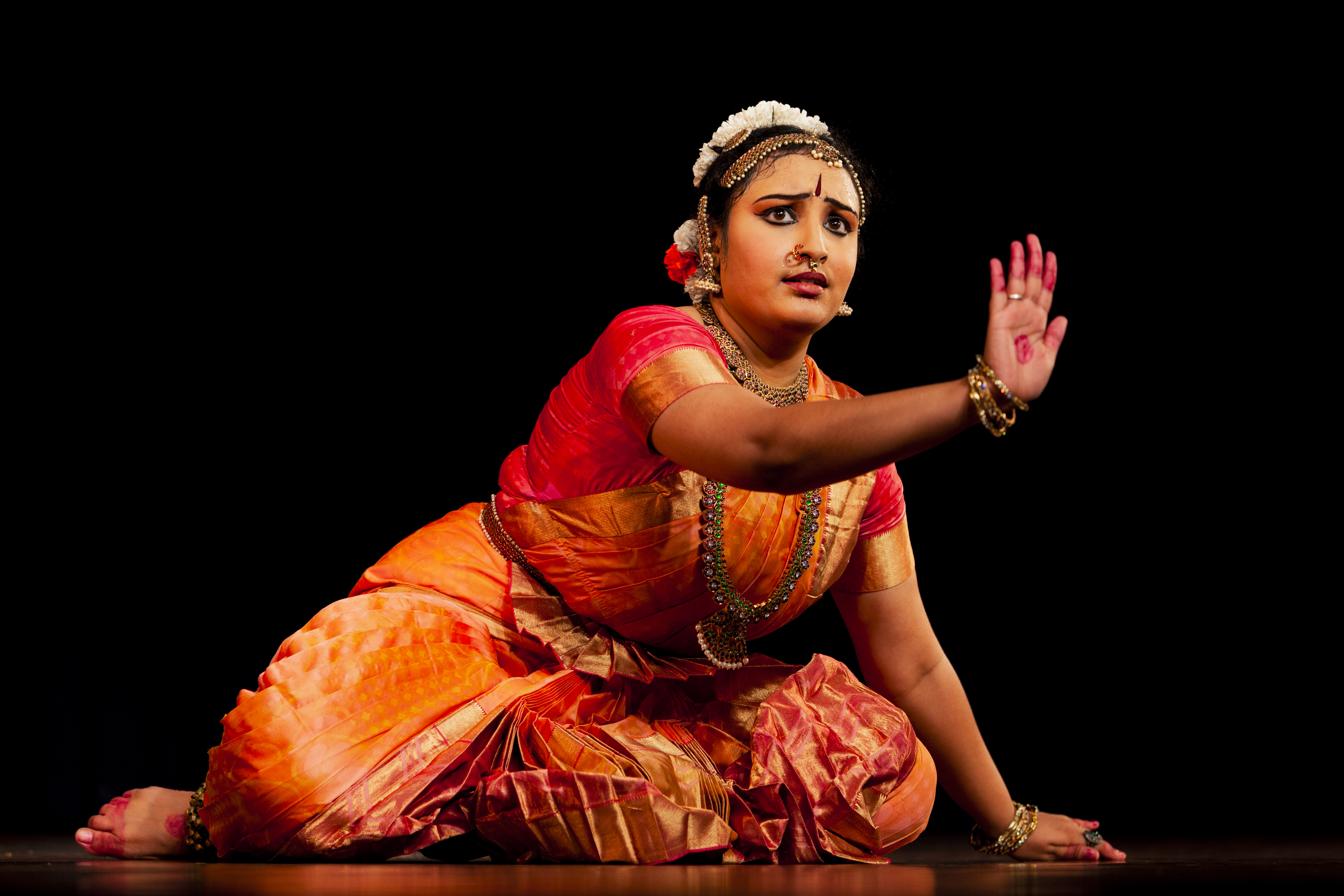
The form is set in a raga and taal, usually medium-to-fast, with a main melody and a contrasting second melody in a higher register introduced before returning to the theme. Singers may recite tihais, gats and tukdas within the tarana and sometimes insert a Persian quatrain. It is frequently performed as the concluding, uplifting piece of a recital. The Carnatic tillana is based on the same principle, adapted primarily for dance.
Types & forms
Masters across the generations
In cinema & popular culture
The tarana's rhythmic, wordless virtuosity has influenced fusion and film music and remains a favourite showpiece in classical concerts, its syllabic drive making it one of the most immediately exhilarating classical vocal forms for new listeners.
Contemporary presence
Tarana is a living, standard part of the Hindustani concert repertoire, sung by vocalists across gharanas, and its principle continues in the Carnatic tillana; the 20th-century master Amir Khan and singers like Nissar Hussain Khan are especially associated with it.
Across the regions
Tarana belongs to the pan-North-Indian Hindustani tradition, associated in origin with the Delhi (Dilli) gharana lineage from Khusrau, and performed across all Hindustani centres; its counterpart the tillana spread through Carnatic music and Bharatanatyam in the south.
Further reading
The Atlas perspective
[Atlas Assessment] Tarana is a distinct classical node with graph links to Amir Khusrau, Khyal, the Dilli gharana and the Carnatic tillana, valuable as a cross-system connector between Hindustani and Carnatic traditions. It is built as a standalone form (unlike the Carnatic sub-forms Varnam/Tillana/RTP, which are covered within the Carnatic Classical profile) because of its independent identity and Khusrau attribution.