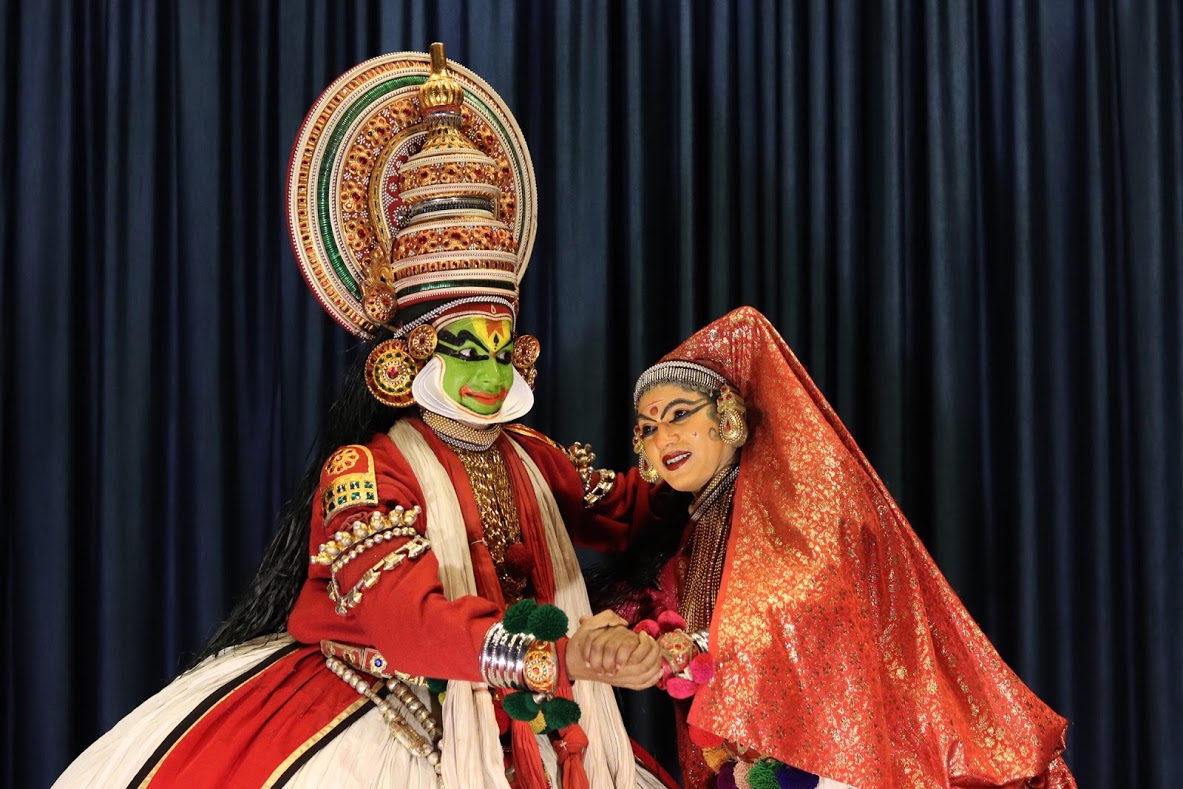
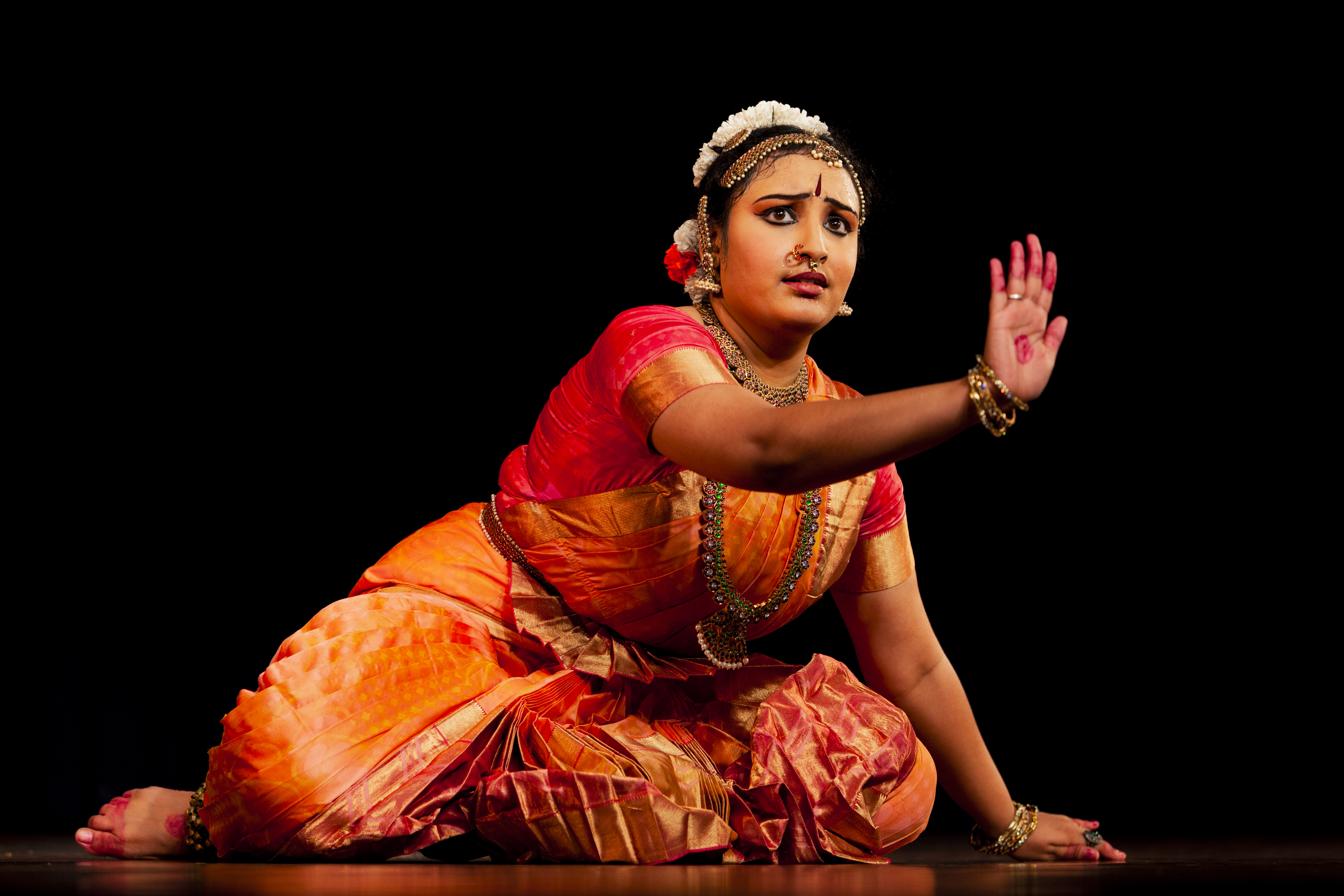
Origin & evolution
Sattriya takes its name from Assam's Vaishnavite monasteries, the sattras, which were founded by Mahapurush Srimanta Sankardev (1449-1568) and his principal disciple Madhavdev as centres of the Ek Sharan Naam Dharma, a monotheistic devotional movement within Vaishnavism that rejected caste distinctions and idol worship in favour of direct devotional surrender to Krishna.
Sankardev created Sattriya as a component of the Ankiya Nat (one-act play), a dramatic form he developed to communicate devotional and moral teachings through performance. The dance, music and drama of the Ankiya Nat were integrated artistic expressions of the sattra's religious life. Sankardev wrote the first plays, composed the musical framework (known as Borgeet), and systematised the dance vocabulary drawing on the Natya Shastra.
For approximately five centuries after Sankardev's death, Sattriya was practised exclusively within the sattras, performed by Bhokots (male monks) as part of the sattras' religious calendar. The isolation of the sattras and the strictness of their discipline preserved the form's integrity through periods of political disruption that destroyed court-based arts elsewhere in India. Women were not permitted to perform Sattriya within the sattras.
The form began emerging from the sattras in the early 20th century. The most significant step was the Sangeet Natak Akademi's formal recognition on 15 November 2000, which brought institutional resources and national visibility. Since recognition, teaching has spread beyond the monastic community and women have become significant practitioners for the first time.
Why Sattriya
Sattriya integrates three elements that the Natya Shastra defines as the components of complete dance: Nritta (abstract, rhythmic movement), Nritya (expressive, narrative movement) and Natya (dramatic performance). Unlike Bharatanatyam, which keeps these elements somewhat distinct, Sattriya weaves them together within the Ankiya Nat context.
The form's visual grammar includes a characteristic bent-knee stance, vigorous footwork articulated through the use of ankle bells (ghungru), hand gestures drawn from the Hastamukuta (the Sattriya hand gesture text) and facial expressions following the Natya Shastra's system of navarasas. The Borgeet (sacred song compositions of Sankardev and Madhavdev) form the primary musical accompaniment, performed on the khol (a barrel drum specific to Assamese music), cymbals (taal) and the bahi (bamboo flute).
The repertoire includes the Sattriya prayer dance (Vandana Nritya), Sutradhara (a dance for the narrator figure), Gopi Nritya (dance of the cowherd girls of Krishna's story), Dashavatar (the ten avatars of Vishnu) and the full Ankiya Nat dramatic tradition.
The tradition & its craft
Sattriya's transmission has historically been through the sattra monastic system on Majuli island, the world's largest river island in the Brahmaputra, which remains the most important living centre of the tradition. The major sattras, including Auniati, Kamalabari, Dakhinpat and Garmur, maintain distinct performance traditions. In Assam's sattra communities, the tradition is still transmitted through apprenticeship to senior Bhokot monks.
Since recognition in 2000, teaching institutions in Guwahati, Jorhat and other Assamese cities have established formal training programmes outside the sattra context. The Sangeet Natak Akademi and the Sattriya Nritya Academy have supported training, documentation and performance. Women have entered the tradition, initially encountering resistance from traditional practitioners but now accepted as a significant strand of the form's contemporary practice.
Types & forms
Masters across the generations
Signature works
In cinema & popular culture
Sattriya has been featured in several Assamese films as a signifier of Assamese cultural identity. Its representation in national cinema is limited. The form's visual distinctiveness, particularly the khol drumming and the mask tradition associated with the Ankiya Nat, has attracted documentary filmmakers: several short films on Majuli's sattra culture include Sattriya performance documentation.
Contemporary presence
Since recognition in 2000, Sattriya has expanded significantly beyond the sattras of Majuli. Teaching institutions in Guwahati and Jorhat offer systematic training outside the monastic context. Women have entered the tradition as practitioners, initially encountering resistance but now widely accepted. International performances at world dance festivals have begun to build an audience outside India. The Majuli Cultural Landscape's UNESCO World Heritage Site nomination (under review) has brought additional international attention to the sattra communities and their cultural traditions. Sattriya Nritya Academy and the Sangeet Natak Akademi's regional centre in Guwahati support training, documentation and performance.
Across the regions
Sattriya is primarily concentrated in Assam, with Majuli island as its spiritual and institutional centre. The Majuli Cultural Landscape, home to dozens of sattras, has been proposed for UNESCO World Heritage Site status as much for its Sattriya tradition as for its ecological significance. Guwahati has become the form's urban centre, with institutions including the Sangeet Natak Akademi's regional centre and the Sattriya Nritya Academy.
Beyond Assam, Sattriya is taught in a small number of cities in India where Assamese diaspora communities have established institutional presence. Internationally the form remains less represented than the older classical traditions, but performances at international festivals have begun to build an audience.
Where it lives
Recognition & status
Further reading
The Atlas perspective
Sattriya is the newest entrant to India's classical dance canon and the artform on Culture Atlas with the smallest current profile relative to its historical and cultural significance. The form's score of 8.5 reflects its deep historical roots, its exceptional institutional survival story and its living practice, while acknowledging that its documentation and international reach remain in earlier stages than the older classical forms. The Atlas currently lacks destination profiles for Majuli and Guwahati, which would be the most important graph connections for this artform. Building those profiles is a priority for the next enrichment cycle.