Origin & evolution
Ottamthullal was created by Kunjan Nambiar, considered the father of modern Malayalam literature, around the mid-18th century in the Ambalapuzha region of Kerala. According to the tradition, Nambiar was a musician at a Chakyar Koothu performance who was reprimanded for dozing off; in response he created Ottamthullal as a form that was more engaging and accessible than the exclusive, temple-bound Chakyar Koothu tradition.
Nambiar composed over 60 thullal texts, each a retelling of an episode from Hindu mythology (primarily the Ramayana, Mahabharata and Bhagavata) in vigorous, colloquial Malayalam that allowed for topical satire and social commentary embedded within the mythological narrative. The texts were designed for performance by a single artist who would simultaneously dance, recite and engage with the audience.
Thullal exists in three sub-forms: Ottam Thullal (the fastest tempo), Seethankan Thullal (middle tempo) and Parayan Thullal (slowest). Ottam Thullal, the most energetic of the three, is the most widely performed and gave the tradition its collective name.
Why Ottamthullal
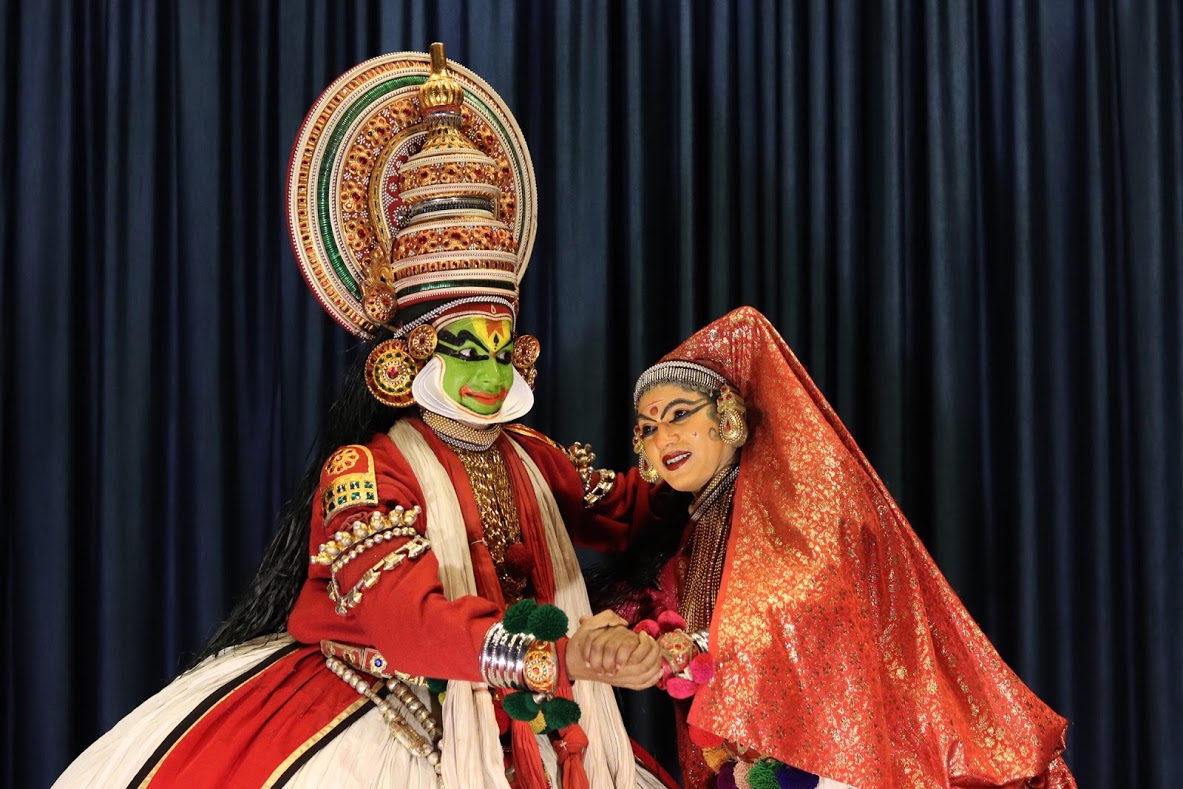
An Ottamthullal performance features a solo artist dressed in an elaborate green costume and makeup that recalls but is distinct from Kathakali. The performer sings the thullal text, reciting the mythology in Kunjan Nambiar's vigorous Malayalam verse, while dancing in the thullal's characteristic style: energetic, rhythmically driven and highly physical. A singer (pannakar) and a mridangam player accompany the performer, with the singer repeating each line the performer sings.
The text's wit is central to the form. Nambiar's compositions embed satirical observation within mythological narrative: a scene from the Ramayana becomes a vehicle for commentary on contemporary social conditions; a divine character becomes a vehicle for gentle mockery of human pretension. This satirical layering, delivered in colloquial Malayalam that any Kerala audience can follow, is what distinguished Thullal from the Sanskrit-medium, brahminically exclusive Chakyar Koothu tradition and made it accessible to the broad public.
The tradition & its craft
Ottamthullal is transmitted through Kerala Kalamandalam, which offers training in the form, and through private guru-shishya relationships with senior practitioners. The tradition is smaller in its practitioner community than Kathakali or Mohiniyattam but maintains consistent performance across the Kerala temple festival circuit and at cultural programmes.
Types & forms
Masters across the generations
Signature works
In cinema & popular culture
Ottamthullal has been featured in several Malayalam films as a signifier of Kerala's traditional performing arts culture. Several documentaries on Kerala's performing traditions include Ottamthullal sequences.
Contemporary presence
Ottamthullal maintains a consistent presence on Kerala's temple festival circuit and at cultural programmes. Kerala Kalamandalam and private teachers continue to train practitioners. The form has benefited from increasing institutional recognition alongside the broader recognition of Kerala's classical performing traditions in the UNESCO and Sangeet Natak Akademi frameworks.
Across the regions
Ottamthullal is practised primarily within Kerala, with its performance centred on the temple festival circuit of central and northern Kerala. It is less widely known outside Kerala than Kathakali or Koodiyattam, though it has been presented at national and international festivals through Kerala's cultural diplomacy programmes.
Where it lives
Recognition & status
Further reading
The Atlas perspective
Ottamthullal connects on the Culture Atlas graph to Kerala Kalamandalam (primary training institution), to the Koodiyattam artform (the tradition it was partly created in opposition to) and to the Thrissur destination profile. The form's score of 8.0 reflects its deep cultural significance and the strength of Kunjan Nambiar's original texts, while acknowledging its smaller contemporary practitioner community relative to Kerala's other classical forms.