Origin & evolution
Mudiyettu is a village ritual theatre of the Bhagavathi/Bhadrakali cult, performed annually in the goddess's temples (kavus) between February and May after the harvest, tying it to the agricultural cycle of the community. It dramatizes the myth in which Brahma grants the demons Darika and Danavendra immunity from death at the hands of any man, so Shiva ordains that the goddess Kali, being a woman, will destroy them. In 2010 it became the second Kerala art form after Kutiyattam to be inscribed on the UNESCO Representative List of the Intangible Cultural Heritage of Humanity.
Why Mudiyettu
Mudiyettu is a whole-community ritual, not a staged entertainment: performers purify themselves through fasting and prayer, and the rite illustrates the interconnectedness of community life, nature and worship. Its central theme, Kali's victory over Darika, enacts the triumph of good over evil, and the goddess's power is invoked through the kalam floor drawing before the drama begins.
The tradition & its craft
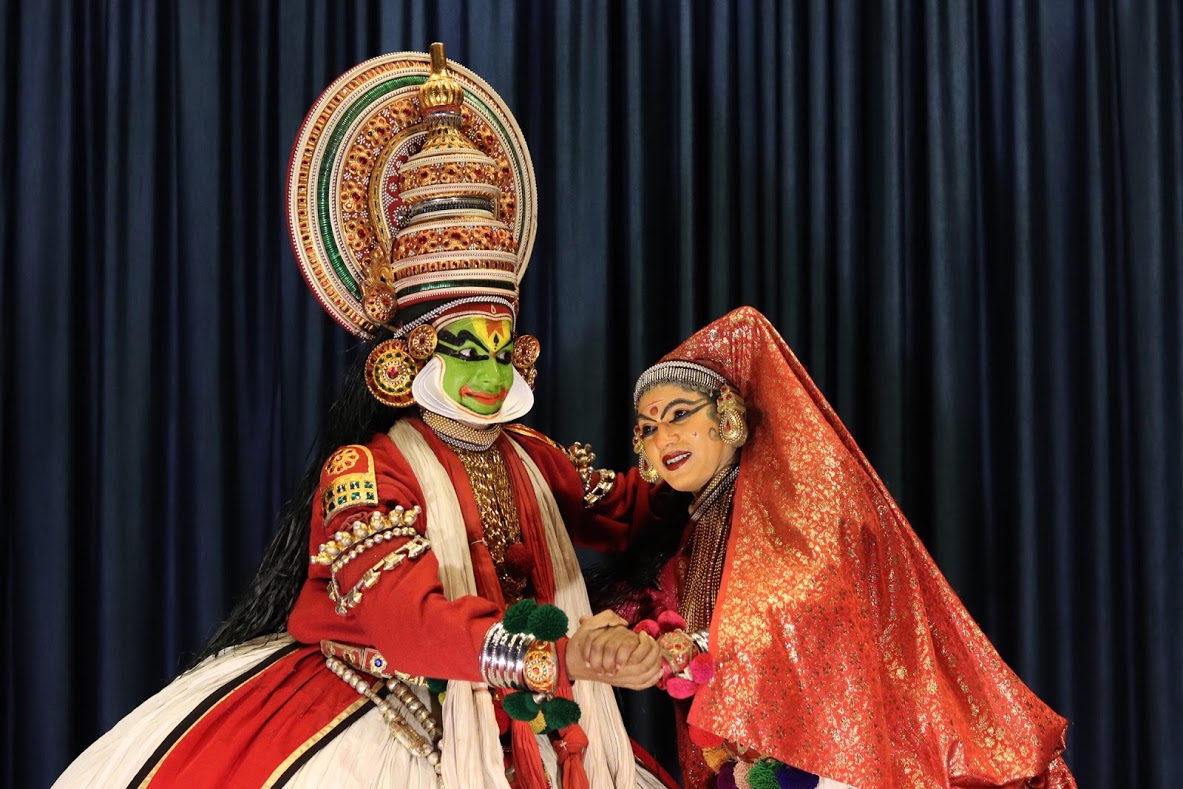
The rite opens with kalamezhuthu, a large, vivid floor image of Bhadrakali holding Darika's severed head, drawn in five natural-powder colours, followed by kalam pattu songs and the ritual erasure of the image. The drama then unfolds from dusk to dawn with seven characters, Kali, Darika, Danavendra, Shiva, Narada, Koyimbadar and the comic Kooli, in elaborate wooden headgear (mudi), fierce black-and-red face paint marked with white and red dots, fire torches and thunderous chenda percussion in the Sopanam style.
Types & forms
Masters across the generations
Signature works
In cinema & popular culture
As a ritual temple art, Mudiyettu lives primarily in situ rather than on screen, but its dramatic imagery of Kali features in documentary film, cultural festivals and the wider visual vocabulary of Kerala's Bhadrakali traditions.
Contemporary presence
Performed by members of the Marar and Kuruppu communities with the whole village participating, Mudiyettu continues as a living annual ritual, its UNESCO inscription supporting safeguarding efforts against the pressures of modernization.
Across the regions
Mudiyettu is concentrated in the Bhadrakali temples of central Kerala, especially Thrissur, Ernakulam, Kottayam and Idukki districts, performed in Bhagavati kavus in villages along the region's rivers. It is closely related to, but distinct from, other Kerala Kali rituals such as Kaliyoottu.
Further reading
The Atlas perspective
[Atlas Assessment] Mudiyettu is a high-recognition ritual node linking to Kerala's Bhadrakali temples, Sopanam music and the kalamezhuthu floor-drawing tradition, with strong graph potential across Kerala destinations and temple festivals. Its value lies in its ritual integrity, which the Atlas records as a living community practice rather than a stage form.