Origin & evolution
Kalaripayattu takes its name from kalari (training ground) and payattu (fight or practice), and is regarded as one of the oldest martial systems still in practice, with origins commonly traced to at least the 3rd century BCE. Tradition credits its founding to the warrior-sage Parashurama, the mythic reclaimer of Kerala, said to have established 108 kalaris. The art matured during Kerala's medieval period of small warring kingdoms (roughly 11th-16th century), when villages maintained a kalari to keep fighters ready, and was historically associated with the Nair warrior caste and, in north Kerala, the Thiyyas. A widely repeated tradition holds that the monk Bodhidharma carried related techniques to China, influencing later Asian martial arts, though this is legend rather than settled history.
Why Kalaripayattu
Kalaripayattu is not only combat but a psycho-physiological discipline that treats body and mind as one system. It classically integrates five interrelated domains: fighting, healing (Ayurveda and marma vital-point therapy), physical conditioning, breath and meditation, and a spiritual-ethical code. Its movements draw on the postures of eight warrior animals including the lion, snake, elephant, tiger and boar.
The tradition & its craft
Training progresses through stages: meithari (body conditioning and flexibility), kolthari (wooden weapons), angathari (metal weapons including the sword-and-shield and the flexible urumi), and finally verumkai (unarmed combat) and marma (vital points). Practice takes place in a sunken, ritually consecrated pit-gymnasium, the kalari, aligned to traditional geomantic principles, under a master called Gurukkal.
Types & forms
Masters across the generations
In cinema & popular culture
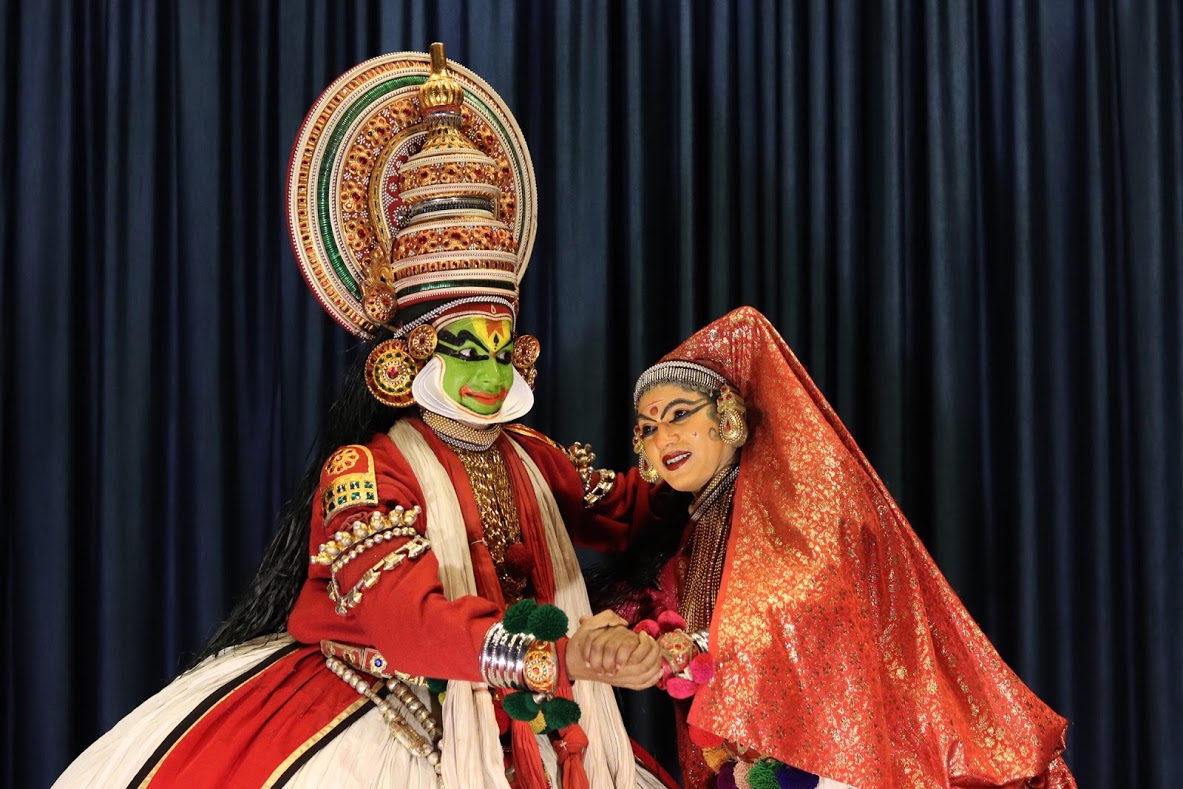
Kalaripayattu's athletic vocabulary has deeply influenced Indian film choreography and stunt work, Kerala's performing arts such as Kathakali and Theyyam, and modern dance and theatre training. Its dramatic weaponry, especially the urumi, is a recurring image in South Indian cinema.
Contemporary presence
Once a warrior caste secret, Kalaripayattu is now practised across castes, faiths and genders, and has attracted actors, dancers and athletes as cross-training and wellness practice. Female warriors such as the balladic Unniyarcha are celebrated, and women train alongside men in modern schools.
Across the regions
Distinct regional styles exist, broadly the Northern (Vadakkan) and Southern (Thekkan) traditions, with a Central style as well. Northern Kalari, linked in legend to Parashurama, and Southern Kalari, linked to sage Agastya, differ in emphasis and technique. The art is concentrated in Kerala but now taught internationally.
Further reading
The Atlas perspective
[Atlas Assessment] Kalaripayattu is a high-value node linking martial practice to Kerala's Ayurveda, temple ritual and performing arts (Kathakali, Theyyam), giving it unusually rich graph potential. The Atlas states the Bodhidharma-to-China lineage as tradition rather than fact, and treats the "6,000 years old" popular claims with caution, anchoring instead to the defensible early-historic-to-medieval range.