Origin & evolution
Bidesia was created by Bhikhari Thakur, who was born in 1887 in the Bhojpur district of Bihar into a low-caste barber (nai) community. Self-taught in music and performance, he formed a theatre company and began composing plays in the Bhojpuri language that addressed the specific social conditions of the Bhojpuri belt: the massive male outmigration to Calcutta, Bombay and the indigo and sugarcane plantations that was disrupting rural family structures.
Bhikhari Thakur's most celebrated play, Bidesia (1917), depicted the plight of women whose husbands had migrated to the city and taken second wives, abandoning their village families. Through the voices of these women, the play delivered a searing social commentary on the intersection of economic migration, patriarchy and caste. In performing Bidesia, Thakur himself played female characters (a Nautanki theatrical convention), creating performances that were simultaneously entertainment and social critique.
Bhikhari Thakur's company performed across the Bhojpuri belt for decades, making him the most celebrated performer in the region's history. He was called Shakespeare of Bhojpuri by scholars (a comparison that, while reductive, indicates the scale of his cultural significance). He composed over two dozen plays and numerous songs, all in Bhojpuri, that form the canonical Bidesia repertoire.
Why Bidesia
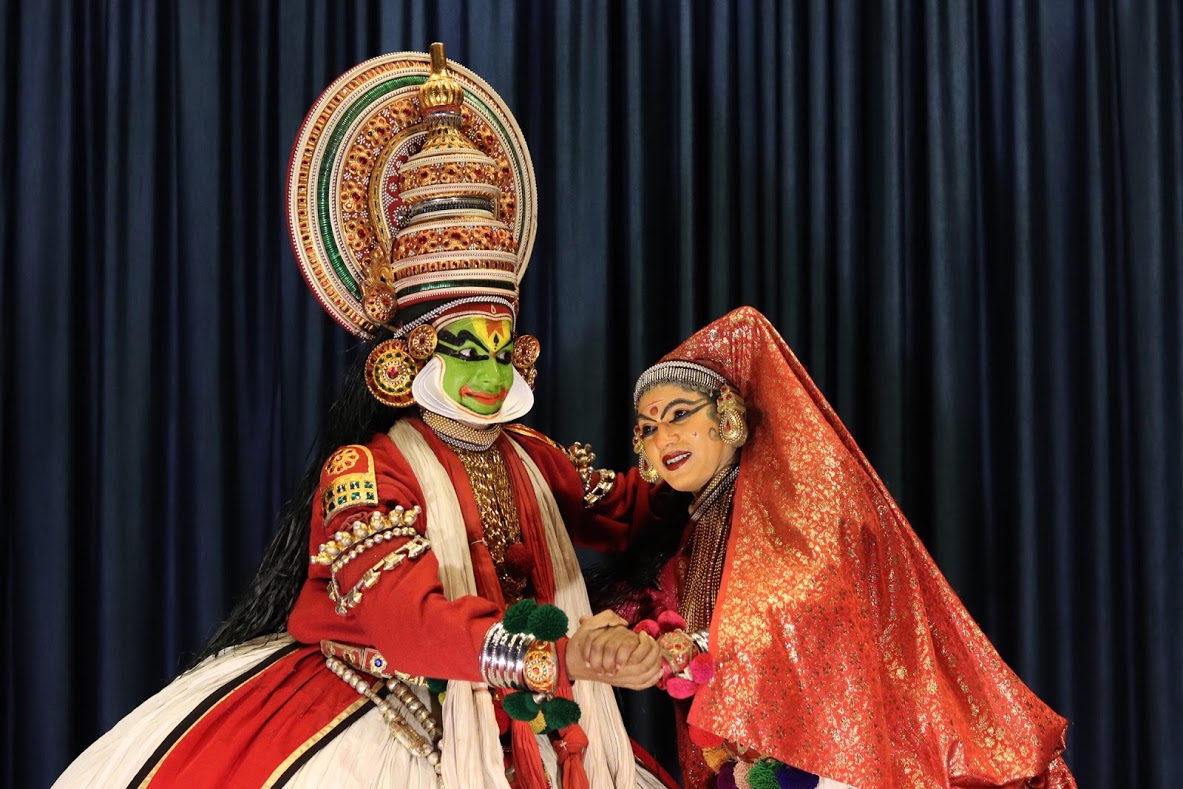
Bidesia's theatrical style combines the verse performance conventions of North Indian folk theatre (similar to Nautanki) with social commentary that is unusually direct and specific about contemporary conditions. The performances feature male performers playing female characters, a convention from the Nautanki tradition that Thakur used to create complex explorations of women's experience and voice.
The Bhojpuri language of the performances is central to the tradition's identity: Bidesia is not translatable into Hindi without losing the specific social world it describes. The musical style draws on the Birha (a Bhojpuri song form associated with separation and longing) and the Jhumur (a Bhojpuri folk dance music) traditions that are native to the region.
The tradition & its craft
Bidesia was transmitted through Bhikhari Thakur's company during his lifetime, with performers trained directly by him. After his death in 1971 the tradition has been maintained by revival efforts rather than continuous professional performance. Several cultural organisations in Patna and in the diaspora Bhojpuri community have worked to document and revive the tradition. Academic interest from scholars including Sudha Mishra has significantly improved the documentation of Thakur's texts and performance history.
Types & forms
Masters across the generations
Signature works
In cinema & popular culture
The Bhojpuri film industry, which is based in Patna and has a large audience across Bihar, Uttar Pradesh and the North Indian diaspora, has incorporated elements of Bidesia's themes and musical conventions, though rarely with explicit acknowledgement of Thakur's creative contribution. The 2012 Hindi film Gangs of Wasseypur (set partly in the Bhojpuri belt) used Bhojpuri folk music that carries traces of the Bidesia tradition.
Contemporary presence
Bidesia occupies an unusual position: the playwright's texts are recognised as among the most significant social literature in Bhojpuri, but the performance tradition has declined substantially from its 20th-century peak. Academic study of Bhikhari Thakur has increased significantly since 1990, with several universities in Bihar and in the diaspora offering courses on his work. Cultural organisations in Patna and the diaspora Bhojpuri community continue occasional revival performances.
Across the regions
Bidesia is associated with the Bhojpuri-speaking region covering western Bihar and eastern Uttar Pradesh. The diaspora Bhojpuri community in Mauritius, Fiji, Suriname and Trinidad, descended from indentured labourers who carried Bhojpuri culture with them, maintains a distant but documented connection to the Bidesia tradition.
Where it lives
Recognition & status
Further reading
The Atlas perspective
Bidesia connects on the Culture Atlas graph through the Bhojpuri cultural ecosystem to the Nautanki artform (adjacent north Indian verse folk theatre). The form's score of 7.5 reflects the extraordinary significance of Bhikhari Thakur's creative legacy alongside the honest reality of the tradition's declining performance practice.